
Account Abstraction in Ethereum Explained: Complete Guide to ERC-4337, Smart Wallets & Gasless Transactions
Learn Account Abstraction in Ethereum with this complete guide. Understand ERC-4337, smart wallets, gasless transactions, social recovery, Paymasters, Bundlers, benefits, use cases, and the future of Ethereum wallet technology
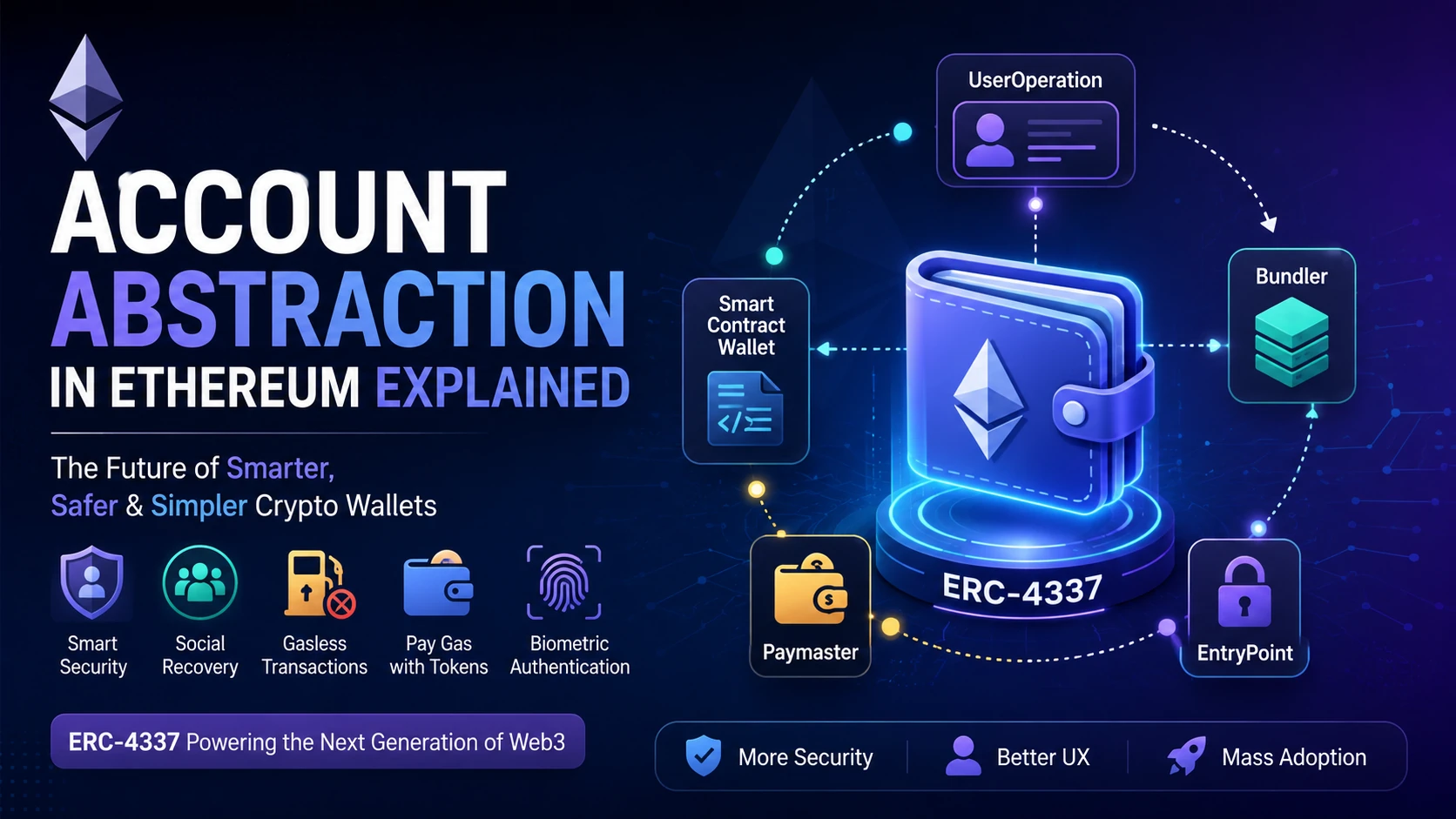
Table of Content
Table of Content
Introduction
Ethereum has always been one of the most innovative blockchain networks in the world. Over the years, it has introduced groundbreaking technologies like smart contracts, decentralized applications (dApps), NFTs, decentralized finance (DeFi), and Layer 2 scaling solutions. However, despite these advancements, one challenge has remained the same: blockchain wallets are still difficult for many users.
Losing a private key means losing access to your assets forever. Every transaction requires users to hold ETH for gas fees, and interacting with decentralized applications can sometimes involve multiple signatures and confusing steps. These issues create a poor experience for beginners and even experienced crypto users.
This is where Account Abstraction (AA) changes everything.
Account Abstraction is one of the most important upgrades to the Ethereum ecosystem because it makes wallets smarter, safer, and far easier to use. Instead of forcing users to manage complicated private keys and transaction rules, wallets become programmable through smart contracts. This opens the door to features like social recovery, gasless transactions, spending limits, automated payments, biometric authentication, and much more.
In this guide, you will learn what Account Abstraction is, how it works, why Ethereum introduced it, its benefits, challenges, real-world use cases, and why many experts believe it represents the future of blockchain user experience.
What is Account Abstraction?
Account Abstraction is a technology that allows Ethereum wallets to function like smart contracts instead of simple externally owned accounts (EOAs).
Traditionally, Ethereum has two types of accounts:
- Externally Owned Accounts (EOAs)
- Smart Contract Accounts
An EOA is controlled by a private key. Every transaction must be signed using that key. If the key is lost, access to the wallet is permanently lost.
Smart Contract Accounts, on the other hand, are programmable. They can execute predefined rules and automate various tasks, but they cannot initiate transactions on their own.
Account Abstraction combines the advantages of both account types. It enables wallets to become programmable smart contracts while still allowing users to send transactions just like a normal wallet.
In simple words, your wallet becomes an intelligent application instead of just a storage place for private keys.
Why Ethereum Needed Account Abstraction
The traditional wallet model creates several usability problems.
1. Private Keys Are Difficult to Manage
Users must securely store a long recovery phrase.
If it gets lost:
- Assets cannot be recovered.
- No customer support exists.
- Funds are permanently inaccessible.
This is one of the biggest barriers preventing mainstream adoption.
2. Every Transaction Requires ETH
Even if someone owns USDC or another token, they still need ETH to pay gas fees.
This often creates unnecessary confusion.
3. Poor User Experience
New users must understand:
- Gas fees
- Nonces
- Signatures
- Wallet approvals
- Seed phrases
For people coming from Web2 applications, this learning curve is intimidating.
4. Limited Security Options
Traditional wallets provide only one security layer.
Whoever controls the private key controls everything.
There are no built-in options like:
- Daily spending limits
- Two-factor authentication
- Multi-device approval
- Guardian recovery
Understanding the Traditional Ethereum Account System
Before understanding Account Abstraction, it helps to know how Ethereum accounts currently work.
Externally Owned Account (EOA)
An EOA is created using:
- Public Key
- Private Key
The private key signs every transaction.
Examples include:
- MetaMask
- Trust Wallet
- Coinbase Wallet
- Rabby Wallet
Advantages:
- Fast
- Simple
- Decentralized
Disadvantages:
- Single point of failure
- Lost keys mean lost funds
- Cannot automate actions
Smart Contract Account
A smart contract account contains code instead of a private key.
Advantages:
- Programmable
- Can enforce custom rules
- Can automate logic
Disadvantages:
- Cannot directly initiate transactions
- Requires an EOA to interact
How Account Abstraction Works
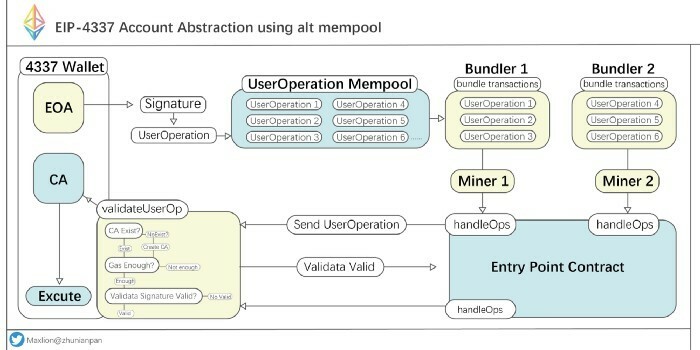
Instead of using an EOA to sign transactions directly, Account Abstraction introduces a new flow.
The user creates a request called a User Operation instead of a standard Ethereum transaction.
This User Operation is sent to a special component called the Bundler.
The Bundler collects multiple operations and packages them into one Ethereum transaction.
The transaction is then processed through a special smart contract called the EntryPoint.
The EntryPoint verifies whether the wallet rules are satisfied before executing the transaction.
This architecture allows wallets to implement custom authentication and transaction logic without changing Ethereum's core consensus.
ERC-4337: The Foundation of Modern Account Abstraction
The biggest milestone for Account Abstraction arrived with ERC-4337.
Unlike previous proposals, ERC-4337 did not require changes to Ethereum's consensus layer.
Instead, it introduced new infrastructure built entirely with smart contracts.
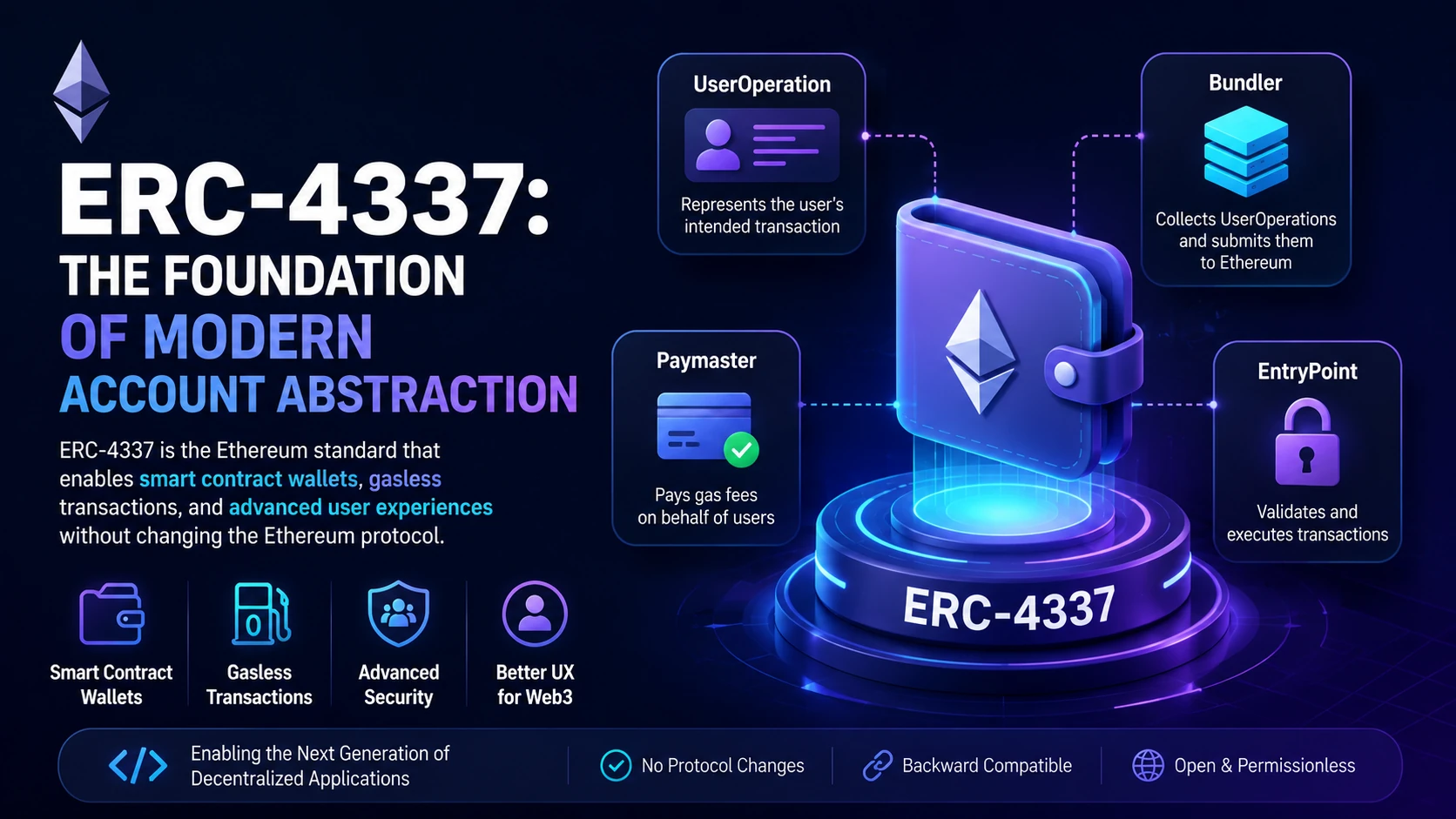
The main components include:
UserOperation
Represents the user's intended transaction.
Bundler
Collects UserOperations and submits them to Ethereum.
EntryPoint Contract
Validates and executes transactions.
Paymaster
Pays gas fees on behalf of users.
Smart Contract Wallet
Stores wallet logic instead of relying only on a private key.
Because ERC-4337 works without modifying Ethereum itself, developers can adopt it today.
Major Benefits of Account Abstraction
1. Social Recovery
One of the most valuable features is wallet recovery.
Instead of relying on a seed phrase, users can nominate trusted guardians.
These guardians may include:
- Friends
- Family members
- Multiple personal devices
- Hardware wallets
If access is lost, the guardians collectively approve recovery.
This makes wallets much safer for everyday users.
2. Gasless Transactions
Normally users need ETH before making transactions.
With Account Abstraction, a Paymaster can sponsor gas fees.
Benefits include:
- Better onboarding
- Free first transaction
- Improved gaming experience
- Easier NFT minting
Users can begin using Ethereum immediately.
3. Pay Gas Using Tokens
Instead of ETH, users may pay transaction fees using:
- USDC
- DAI
- USDT
- Other ERC-20 tokens
This creates a smoother experience because users no longer need to swap tokens just to pay gas.
4. Multi-Signature Security
Wallets can require multiple approvals before executing important transactions.
For example:
- Mobile confirmation
- Laptop approval
- Hardware wallet confirmation
This significantly improves security.
5. Spending Limits
Smart wallets can automatically enforce daily limits.
Example:
Maximum daily transfer:
$500
Any larger transfer requires additional approval.
This helps protect users from accidental or malicious transactions.
6. Automated Transactions
Because wallet logic is programmable, recurring actions become possible.
Examples include:
- Monthly subscriptions
- Automated investments
- Scheduled payments
- Dollar-cost averaging
- Salary distribution
7. Biometric Authentication
Instead of remembering seed phrases, wallets may support:
- Fingerprint authentication
- Face recognition
- Device authentication
- Passkeys
These methods provide a familiar Web2 experience while still preserving decentralized ownership.
Real-World Applications
Decentralized Finance (DeFi)
Account Abstraction makes DeFi much more accessible.
Users can:
- Deposit automatically
- Reinvest rewards
- Schedule recurring investments
- Reduce transaction complexity
Blockchain Gaming
Gaming benefits enormously.
Players can:
- Receive sponsored transactions
- Buy items without ETH
- Automatically claim rewards
- Enjoy smoother onboarding
Most gamers never want to think about blockchain infrastructure.
Account Abstraction hides that complexity.
NFT Platforms
NFT marketplaces can allow users to:
- Mint NFTs without ETH
- Batch purchases
- Recover wallets safely
- Reduce failed transactions
Business Wallets
Companies can create wallets with advanced approval systems.
Examples include:
- Finance manager approval
- CEO confirmation
- Multi-team authorization
- Budget controls
DAOs
Decentralized Autonomous Organizations can automate treasury management.
Features include:
- Spending policies
- Time locks
- Multi-signature approvals
- Automated payroll
Popular Wallets Supporting Account Abstraction
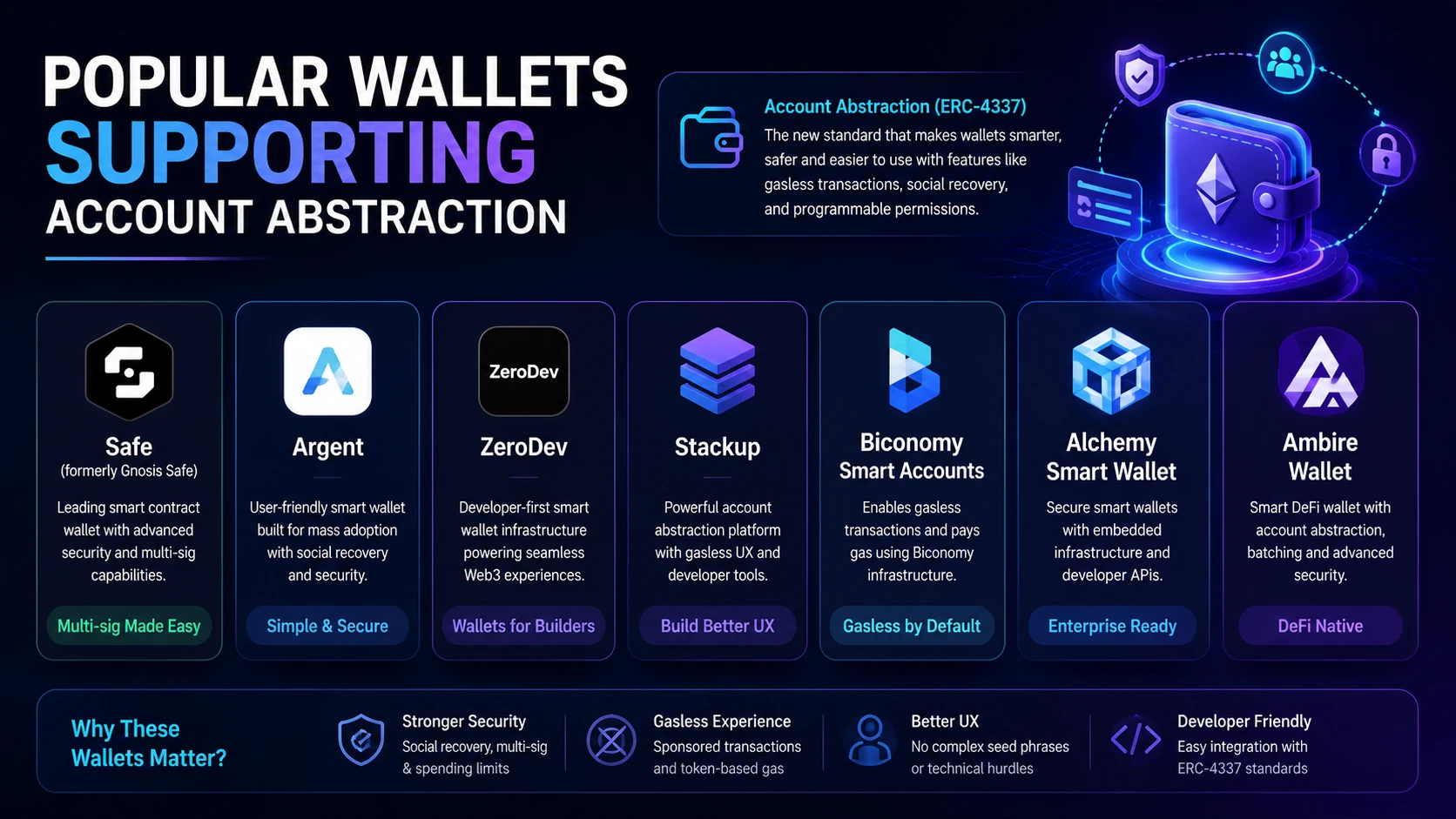
Several wallets are already adopting Account Abstraction technology.
Examples include:
- Safe (formerly Gnosis Safe)
- Argent
- ZeroDev
- Stackup
- Biconomy Smart Accounts
- Alchemy Smart Wallet
- Ambire Wallet
As Ethereum adoption grows, many traditional wallets are expected to integrate similar functionality.
Challenges of Account Abstraction
Although the technology is promising, several challenges still exist.
Smart Contract Risks
Since wallets become smart contracts, poorly written code can introduce vulnerabilities.
Regular security audits are essential.
Higher Complexity
Developers must understand additional infrastructure such as:
- Bundlers
- Paymasters
- EntryPoint
- UserOperations
This increases development complexity.
Ecosystem Adoption
Not every wallet or decentralized application fully supports Account Abstraction today.
Compatibility continues to improve as adoption increases.
Additional Infrastructure
The ecosystem now depends on:
- Bundlers
- Paymasters
- Smart wallet services
Reliable infrastructure is necessary for the best user experience.
Why Developers Are Excited
Developers gain enormous flexibility.
Instead of forcing every user into the same wallet behavior, applications can define custom rules.
Examples include:
- Automatic subscriptions
- Corporate wallets
- Family wallets
- Student wallets
- Gaming wallets
- Enterprise security systems
This flexibility enables developers to create blockchain applications that feel as easy to use as traditional mobile apps.
The Future of Account Abstraction
Many Ethereum developers believe Account Abstraction will eventually become the default wallet standard.
Future improvements may include:
- AI-powered wallet assistants
- Intelligent fraud detection
- Automatic scam prevention
- Cross-chain account management
- Better Layer 2 integration
- Passwordless authentication
- Session keys for gaming
- Enterprise-grade compliance tools
As infrastructure matures, users may not even realize they are interacting with blockchain technology. Wallets will simply behave like modern applications while preserving the transparency and ownership benefits of decentralized systems.
Best Practices for Using Account Abstraction Wallets
If you plan to use an Account Abstraction wallet, consider these recommendations:
- Choose wallets that have undergone independent security audits.
- Enable social recovery only with trusted guardians.
- Test recovery procedures before storing significant assets.
- Keep wallet software updated to receive the latest security improvements.
- Understand the permissions granted to dApps and revoke unnecessary access when no longer needed.
- Start with smaller amounts while learning how smart wallets and sponsored transactions work.
Following these practices helps you take advantage of advanced wallet features while minimizing potential risks.
Conclusion
Account Abstraction represents one of the most significant improvements to Ethereum's user experience. By transforming wallets into programmable smart contracts, it removes many of the barriers that have slowed blockchain adoption for years.
Features such as social recovery, gas sponsorship, token-based gas payments, spending limits, multi-signature approvals, automated transactions, and biometric authentication make Ethereum more practical for everyday users and businesses alike.
Although the technology is still evolving, its impact is already visible across DeFi platforms, blockchain games, NFT marketplaces, and enterprise applications. As more wallets and decentralized applications adopt ERC-4337, interacting with Ethereum will become simpler, safer, and more intuitive.
For anyone interested in the future of Web3, understanding Account Abstraction is essential. It is not just another technical upgrade—it is a major step toward making decentralized technology accessible to millions of new users around the world.
Frequently Asked Questions (FAQs)
1. What is Account Abstraction in Ethereum?
Account Abstraction is a technology that turns Ethereum wallets into programmable smart contract accounts. It enables advanced features such as social recovery, gasless transactions, spending limits, multi-signature approvals, and automated payments, making blockchain wallets easier and safer to use.
2. What is ERC-4337?
ERC-4337 is the Ethereum standard that enables Account Abstraction without changing Ethereum's core protocol. It introduces components like UserOperations, Bundlers, EntryPoint contracts, and Paymasters to support smart account functionality.
3. Can I pay gas fees without ETH using Account Abstraction?
Yes. With Account Abstraction, users can pay gas fees using supported ERC-20 tokens such as USDC or have a Paymaster sponsor the transaction, allowing gasless or token-based transactions in many applications.
4. Is Account Abstraction more secure than traditional wallets?
It can be. Smart contract wallets support additional security features like social recovery, multi-signature approvals, spending limits, and custom authentication methods. However, security also depends on the quality of the wallet's smart contract implementation and audits.
5. Which wallets support Account Abstraction?
Several wallets already support or are building on Account Abstraction, including Safe, Argent, Biconomy Smart Accounts, Alchemy Smart Wallet, ZeroDev, Stackup, and Ambire Wallet. Support is expected to expand as ERC-4337 adoption continues to grow.