Powerful AI Prompts for Resume Writing: Create ATS-Friendly Resumes Faster
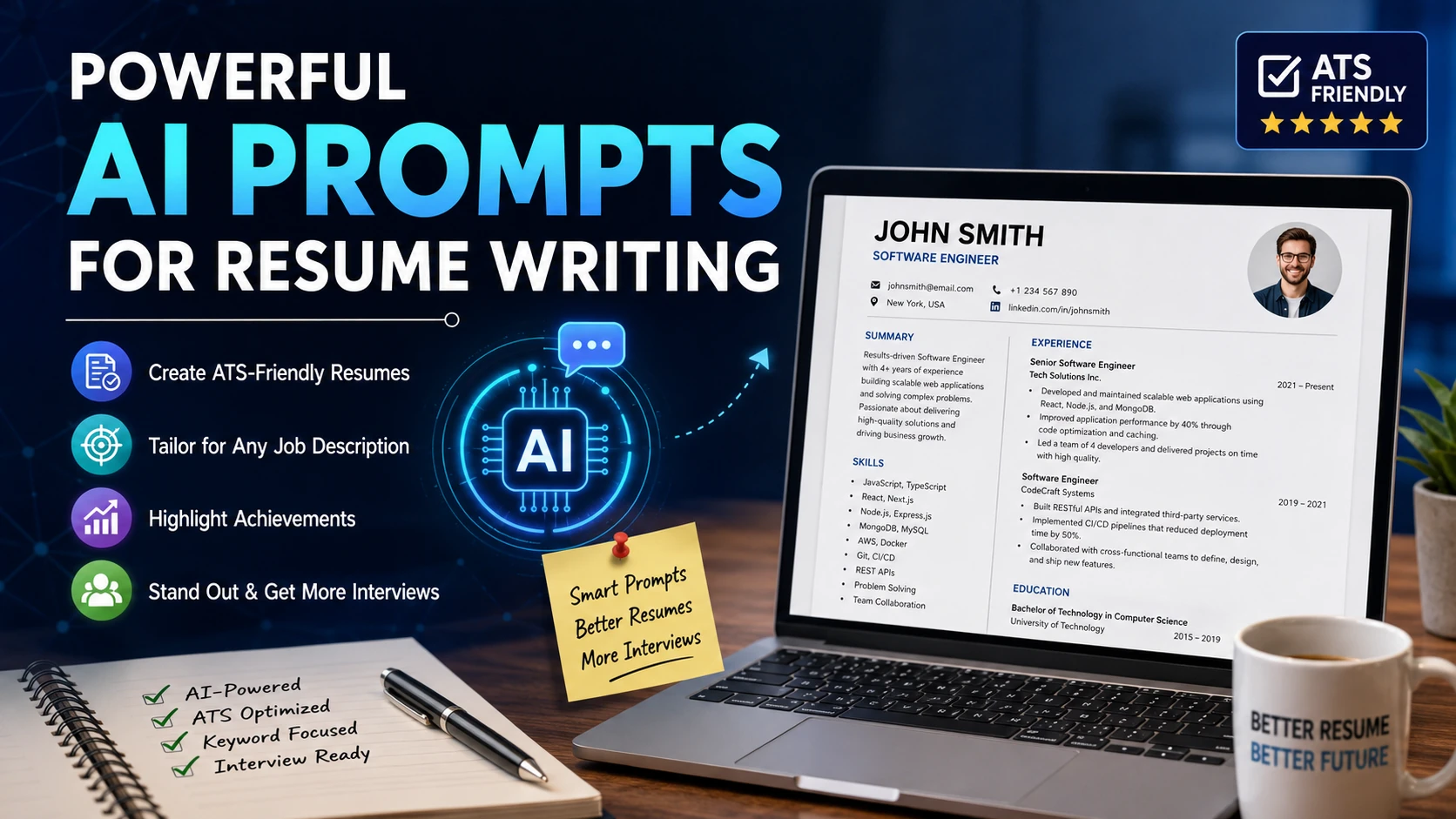
Table of Content
Table of Content
A resume is often the first impression a recruiter has of a job candidate. In today's competitive job market, a professionally written resume can be the difference between receiving an interview invitation and being overlooked. Recruiters spend only a few seconds reviewing each application before deciding whether to continue reading or move on to the next candidate.
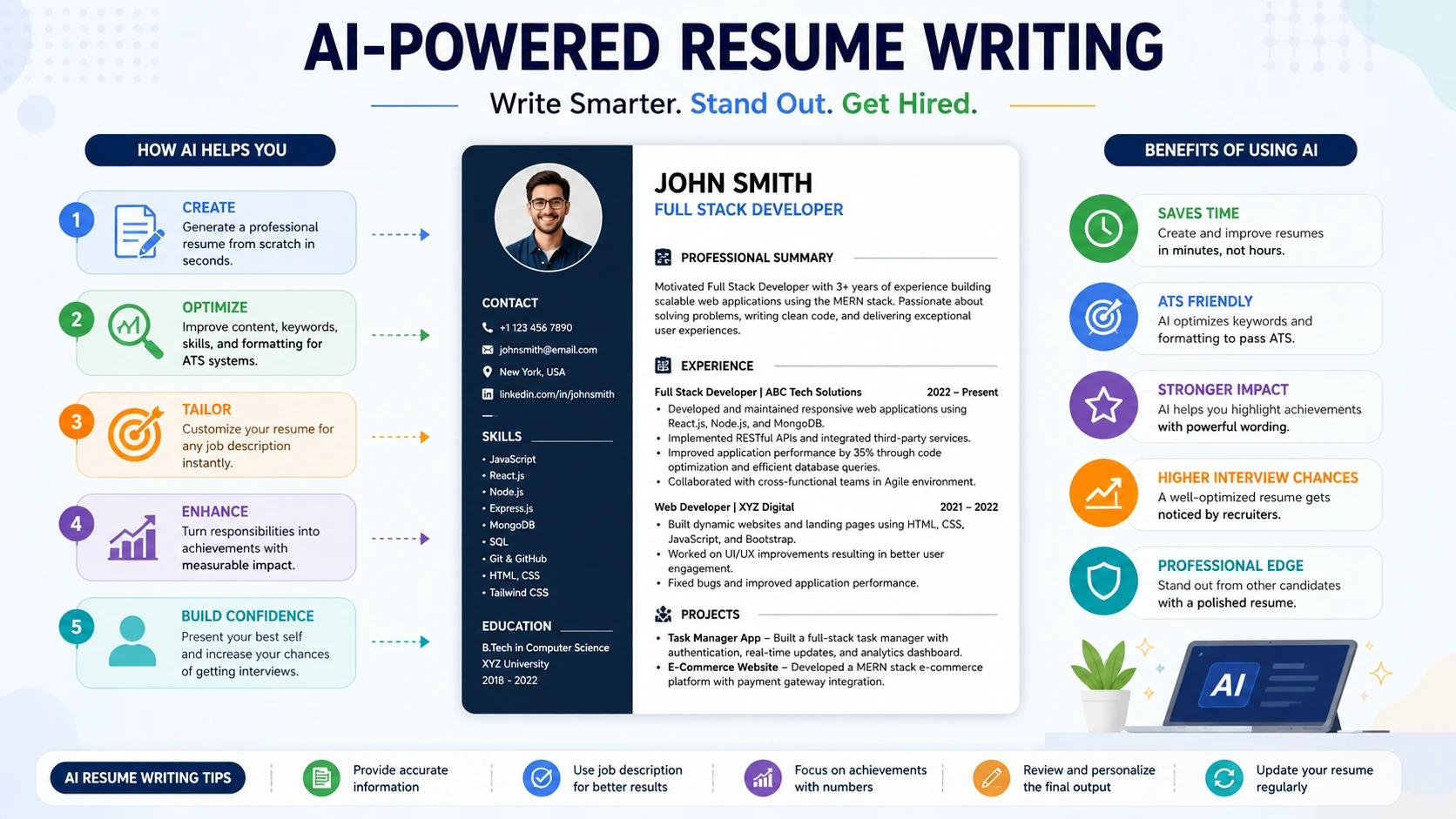
Artificial Intelligence has completely transformed the way people prepare resumes. Instead of struggling to find the right words or worrying about formatting, job seekers can now use AI to create professional, ATS-friendly resumes within minutes. Modern AI tools can analyze job descriptions, improve grammar, rewrite weak bullet points, suggest stronger achievements, optimize keywords, and even tailor resumes for specific companies.
However, simply asking AI to "write my resume" rarely produces outstanding results. The quality of the output depends heavily on the prompt you provide. A detailed and well-structured prompt gives AI enough context to generate personalized, relevant, and recruiter-friendly content.
In this guide, you'll learn how to use AI effectively for resume writing, discover the most common resume mistakes that prevent candidates from getting interviews, and explore five powerful AI prompts that can help create resumes recruiters actually want to read.
Whether you're a student, fresher, experienced professional, freelancer, career changer, or executive, these prompts will help you create stronger resumes while saving hours of manual work.
Why AI is Changing Resume Writing
The hiring process has evolved significantly over the last few years. Companies now receive hundreds or even thousands of applications for a single opening. To manage this volume, many organizations use Applicant Tracking Systems (ATS) before a recruiter even reviews a resume.
An ATS scans resumes to identify candidates whose skills, experience, education, and keywords match the job description. If your resume lacks relevant keywords or has poor formatting, it may never reach a human recruiter regardless of your qualifications.
This is where AI becomes valuable.
Instead of spending hours researching resume templates, writing bullet points, or guessing which keywords recruiters prefer, AI can assist with many tasks, including:
- Writing professional resume summaries
- Creating achievement-based work experience
- Improving grammar and readability
- Matching job description keywords
- Suggesting technical and soft skills
- Removing repetitive language
- Creating ATS-friendly formatting
- Customizing resumes for different industries
- Generating strong project descriptions
- Highlighting measurable achievements
The result is a resume that is clearer, more professional, and more aligned with modern hiring practices.
What Makes a Resume Stand Out?
Many candidates assume that adding more information automatically creates a better resume. In reality, recruiters prefer resumes that are concise, relevant, and focused on achievements rather than responsibilities.
A strong resume should immediately answer three important questions:
1. Who Are You?
Start with a professional summary that explains your experience, skills, and career goals in just a few sentences.
Example:
Results-driven Full Stack Developer with three years of experience building scalable web applications using React, Node.js, Express, and MongoDB. Passionate about developing high-performance solutions and improving user experience.
2. What Value Can You Provide?
Instead of listing daily responsibilities, demonstrate measurable results.
Weak Example:
- Responsible for website development.
Strong Example:
- Developed a customer portal that reduced support requests by 35% and improved page load speed by 42%.
Recruiters prefer achievements because they show the impact of your work rather than simply describing your duties.
3. Why Should the Company Hire You?
Your skills, certifications, projects, and accomplishments should clearly align with the requirements mentioned in the job description.
For example, if the company requires:
- React
- TypeScript
- REST APIs
- Git
- Agile
Your resume should naturally include these technologies if you have experience with them.
AI can quickly identify missing keywords and recommend improvements without making your resume appear stuffed with unnecessary terms.
Common Resume Mistakes That Reduce Interview Chances
Many resumes fail not because candidates lack skills but because they contain avoidable mistakes.
Writing Generic Career Objectives
A statement like:
"Looking for an opportunity to grow in a reputed organization."
appears in thousands of resumes and tells recruiters almost nothing.
Instead, write a summary focused on your expertise and value.
Listing Responsibilities Instead of Achievements
Employers already know what a Software Developer or Marketing Executive typically does.
They want to know:
- What problems did you solve?
- What improvements did you make?
- What measurable results did you achieve?
Ignoring ATS Keywords
Many applicants submit the same resume to every company.
This approach significantly reduces interview opportunities because different employers prioritize different skills.
AI can compare your resume with a job description and suggest missing keywords naturally.
Using Poor Formatting
Common formatting problems include:
- Multiple fonts
- Excessive colors
- Tables
- Graphics
- Images
- Complex layouts
- Tiny font sizes
These elements may confuse ATS software.
Simple, clean formatting is almost always more effective.
Making the Resume Too Long
Recruiters appreciate concise resumes.
General recommendations:
- Freshers: One page
- Professionals with 3–8 years: One to two pages
- Senior professionals: Two pages
Every section should contribute meaningful information.
Weak Action Verbs
Instead of repeatedly writing:
- Worked on
- Helped
- Responsible for
- Assisted
Use stronger action verbs such as:
- Developed
- Designed
- Optimized
- Implemented
- Automated
- Improved
- Increased
- Led
- Built
- Delivered
- Streamlined
- Migrated
- Integrated
- Reduced
These words make your achievements more impactful.
How to Use AI Effectively for Resume Writing
AI works best when you provide detailed instructions instead of vague requests.
Poor Prompt:
Write my resume.
Better Prompt:
Create a one-page ATS-friendly resume for a React Developer with two years of experience in React, Next.js, Node.js, Express.js, MongoDB, Firebase, Tailwind CSS, and REST APIs. Highlight measurable achievements, use professional language, include a compelling summary, optimize keywords for ATS, and keep the formatting suitable for recruiters.
Notice how the second prompt provides:
- Experience level
- Technologies
- Resume length
- Writing style
- ATS optimization
- Formatting expectations
The more context AI receives, the better the output.
AI Prompt #1: Create a Professional Resume from Scratch
This prompt is ideal for students, freshers, career changers, and professionals who want to build a complete resume from the beginning.
Act as an expert resume writer, career coach, and ATS optimization specialist.

Create a professional, modern, ATS-friendly resume based on the information I provide.

Requirements:

• Write a compelling professional summary.
• Highlight measurable achievements wherever possible.
• Use strong action verbs.
• Optimize the resume for Applicant Tracking Systems (ATS).
• Include relevant technical and soft skills.
• Organize sections professionally.
• Improve grammar and readability.
• Keep the formatting recruiter-friendly.
• Make the resume suitable for the target role.
• Suggest additional skills if appropriate.

Information:

Name:
Target Job Role:
Years of Experience:
Education:
Technical Skills:
Soft Skills:
Certifications:
Projects:
Work Experience:
Achievements:
Languages:
Portfolio:
LinkedIn:
GitHub:

At the end, provide:

1. ATS Score Estimate
2. Missing Skills
3. Suggested Improvements
4. Stronger Resume Title
5. Recruiter Feedback
Why This Prompt Works
This prompt provides AI with a structured framework instead of asking for generic content. It encourages the model to generate recruiter-focused language, measurable achievements, ATS optimization, and actionable feedback that can improve the final resume.
AI Prompt #2: Improve an Existing Resume for ATS
Already have a resume? This prompt helps transform it into a stronger version without changing your actual experience.
Act as a senior resume reviewer and ATS optimization expert.

Review my resume like a recruiter.

Tasks:

• Rewrite weak bullet points.
• Improve grammar and clarity.
• Remove repetitive wording.
• Add stronger action verbs.
• Suggest measurable achievements where possible.
• Optimize ATS keywords.
• Improve readability.
• Maintain factual accuracy.
• Keep the formatting professional.
• Highlight sections that need improvement.

Also provide:

1. ATS Compatibility Score
2. Recruiter Review
3. Missing Keywords
4. Interview Readiness Score
5. Final Improved Resume
Why This Prompt Works
Instead of creating a new resume, this prompt focuses on refining what you already have. It asks AI to act like both a recruiter and an ATS reviewer, making it especially useful for candidates who are applying to multiple jobs and need to tailor their resumes quickly without starting from scratch.
AI Prompt #3: Tailor Your Resume for Any Job Description
One of the biggest mistakes job seekers make is sending the exact same resume to every company. While this approach saves time, it usually reduces interview opportunities because every employer values different skills, technologies, and experiences.
For example, two companies hiring for the same Software Engineer position may have completely different requirements.
Company A might prioritize:
- React
- TypeScript
- AWS
- Docker
- CI/CD
Company B might look for:
- Angular
- Java
- Spring Boot
- MySQL
- Microservices
Submitting one generic resume to both companies means your application may miss important keywords that recruiters and ATS software are searching for.
AI can quickly analyze a job description, identify the most important qualifications, and customize your resume while keeping all information truthful and relevant.
AI Prompt
Act as a professional resume strategist and ATS optimization expert.

I will provide:

1. My current resume
2. A job description

Your tasks are:

• Compare my resume with the job description.
• Identify missing keywords.
• Rewrite my professional summary.
• Improve work experience bullet points.
• Highlight relevant projects.
• Suggest technical skills that should appear.
• Keep all information truthful.
• Make the resume ATS-friendly.
• Prioritize the skills mentioned by the employer.
• Remove irrelevant information.
• Ensure the resume remains concise and professional.

Finally provide:

1. ATS Match Percentage
2. Missing Skills
3. Resume Improvement Suggestions
4. Updated Resume
5. Recruiter Feedback
Why This Prompt Works
Instead of rewriting everything, AI focuses on matching your resume with a specific role. This increases the likelihood of passing ATS filters while making your application more relevant to hiring managers.
AI Prompt #4: Write Achievement-Based Resume Bullet Points
Many resumes contain bullet points that describe daily responsibilities instead of accomplishments. Recruiters already know what someone in a particular role is expected to do. What they really want to understand is the impact you made.
Compare these examples:
Weak Example
- Managed social media accounts.
Strong Example
- Increased Instagram engagement by 48% within six months by implementing a content strategy focused on short-form videos and audience interaction.
Another example:
Weak Example
- Worked on company website.
Strong Example
- Redesigned the company website, improving page speed by 55% and increasing lead conversion by 22%.
Achievement-focused bullet points make your resume more persuasive because they demonstrate measurable results.
AI Prompt
Act as an executive resume writer.

Rewrite my resume bullet points using measurable achievements.

Requirements:

• Start each bullet with a strong action verb.
• Focus on impact instead of responsibilities.
• Include numbers, percentages, revenue, time savings, productivity improvements, or performance metrics whenever possible.
• Keep each bullet concise.
• Use professional language.
• Remove repetitive wording.
• Make every bullet recruiter-friendly.
• Improve ATS optimization.

For every original bullet point, provide:

Original Version

Improved Version

Reason for Improvement
Why This Prompt Works
This prompt transforms ordinary descriptions into achievement-oriented statements that immediately capture a recruiter's attention. Even when exact metrics are unavailable, AI can suggest places where realistic measurements or outcomes could be added based on your actual work.
AI Prompt #5: Create an ATS-Friendly Resume for Freshers
Fresh graduates often believe they have nothing valuable to include because they lack professional experience. In reality, recruiters understand that freshers are at the beginning of their careers. They focus more on education, projects, internships, certifications, technical skills, and learning potential.
If you are a fresher, your resume should highlight:
- Academic projects
- Internships
- Personal projects
- Technical skills
- Certifications
- Volunteer work
- Leadership activities
- Hackathons
- Open-source contributions
- Problem-solving abilities
AI can organize these sections professionally and present your strengths confidently.
AI Prompt
Act as a resume expert specializing in fresher hiring.

Create an ATS-friendly resume for a fresher.

Requirements:

• Write a strong professional summary.
• Highlight academic projects effectively.
• Showcase technical skills clearly.
• Include certifications and achievements.
• Present internships professionally.
• Recommend industry-relevant keywords.
• Keep the resume limited to one page.
• Use recruiter-friendly formatting.
• Improve readability.
• Suggest improvements for future career growth.

At the end include:

1. ATS Score
2. Missing Skills
3. Interview Readiness
4. Recruiter Feedback
5. Career Improvement Tips
Why This Prompt Works
This prompt focuses on potential rather than experience. It helps students and recent graduates present themselves as capable candidates by emphasizing practical projects, relevant coursework, and transferable skills.
Best Practices for Using AI in Resume Writing
AI is an excellent writing assistant, but it should not replace your judgment. The most effective resumes are created when AI-generated content is carefully reviewed and personalized.
Be Honest
Never ask AI to invent skills, certifications, or job experiences. Recruiters often verify information during interviews and background checks. A truthful resume builds trust and confidence.
Provide Detailed Context
The quality of AI output depends on the quality of your input. Include information such as your target role, years of experience, key projects, technical skills, certifications, and career goals. The more specific you are, the more relevant the resume will be.
Quantify Your Achievements
Whenever possible, include measurable results. Metrics such as percentages, revenue growth, cost savings, customer satisfaction, or productivity improvements make your accomplishments more credible and impactful.
Customize for Every Application
Even if you are applying for similar positions, take a few minutes to tailor your resume to each job description. Small adjustments to keywords and highlighted skills can significantly improve your ATS compatibility.
Keep the Design Simple
Avoid excessive graphics, icons, tables, or decorative elements. A clean layout with clear headings, consistent fonts, and proper spacing is easier for both recruiters and ATS software to read.
Proofread Before Sending
Although AI can improve grammar and wording, always review the final document yourself. Check for formatting issues, incorrect dates, spelling mistakes, or inconsistencies before submitting your application.
Common Mistakes to Avoid When Using AI
AI can save time, but relying on it without careful review may create new problems.
Using Generic Prompts
Requests like "Write my resume" often produce vague and repetitive content. Detailed prompts lead to far better results.
Copying AI Output Without Editing
Every resume should reflect your own experience and voice. Review AI suggestions carefully and make personal adjustments where necessary.
Keyword Stuffing
Including the same keywords repeatedly to impress ATS systems can make your resume look unnatural. Use relevant keywords in a balanced and meaningful way.
Ignoring the Job Description
A resume should always align with the role you are applying for. Tailoring your content improves both ATS performance and recruiter interest.
Forgetting Human Readability
Remember that your resume is reviewed by both software and people. Clear, concise, and engaging writing is just as important as ATS optimization.
Pro Tips to Get More Interview Calls
- Use a professional resume title that matches the job role.
- Write a compelling summary tailored to the position.
- Prioritize recent and relevant experience.
- Highlight achievements instead of listing responsibilities.
- Include only skills you can confidently discuss during an interview.
- Keep your LinkedIn profile updated to match your resume.
- Add links to your portfolio, GitHub, or personal website if applicable.
- Save and submit your resume as a PDF unless the employer requests another format.
- Review your resume regularly and update it with new skills, certifications, or projects.
- Use AI as a collaborative assistant to refine your content rather than as a tool to fabricate information.
Conclusion
Artificial Intelligence has transformed resume writing from a time-consuming task into a smarter and more strategic process. Instead of spending hours trying to find the right words, organize sections, or guess what recruiters want, job seekers can now use AI to create polished, ATS-friendly resumes in a fraction of the time. However, the real advantage comes from knowing how to communicate with AI effectively, and that starts with using high-quality prompts.
The five prompts shared in this guide are designed to address different stages of the resume writing process. Whether you're creating a resume from scratch, improving an existing one, tailoring it for a specific job, writing achievement-focused bullet points, or building your first resume as a fresher, these prompts provide structured instructions that help AI generate more relevant and professional results.
That said, AI should be viewed as a powerful assistant rather than a replacement for your own judgment. Always verify the content it generates, ensure that every skill and achievement is accurate, and personalize the final resume to reflect your unique experience and career goals. Recruiters value authenticity, and a well-crafted resume that honestly showcases your strengths will always make a stronger impression than one filled with exaggerated claims.
Remember that a successful job application doesn't stop at the resume. Pair your resume with a tailored cover letter, optimize your LinkedIn profile, build a portfolio if applicable, and continue learning new skills relevant to your industry. These combined efforts significantly increase your chances of securing interviews.
As AI technology continues to evolve, job seekers who learn to use it responsibly will gain a competitive advantage. By combining your expertise with intelligent AI prompts, you can create resumes that are clear, compelling, ATS-friendly, and aligned with the expectations of modern recruiters.
Your next interview could start with a single well-written resume—and the right AI prompt might be the tool that helps you create it.
Frequently Asked Questions (FAQs)
1. Can AI create a professional resume from scratch?
Yes. Modern AI tools can generate a complete resume based on the information you provide, including your education, work experience, technical skills, certifications, and projects. They can also write professional summaries, improve grammar, organize sections, and suggest stronger wording. However, you should always review the final output to ensure it accurately reflects your background and career goals.
2. Are AI-generated resumes ATS-friendly?
They can be, provided you use detailed prompts and include the target job description. AI can optimize keyword usage, improve formatting, and organize content in a way that is compatible with most Applicant Tracking Systems. To maximize your chances, keep the layout simple, avoid unnecessary graphics or tables, and tailor your resume for each application.
3. Should I use the same AI-generated resume for every job application?
No. Each employer may prioritize different skills, technologies, or qualifications. It's best to customize your resume for every position by incorporating relevant keywords and emphasizing the experience that aligns most closely with the job description. AI makes this customization process much faster and more efficient.
4. Is it acceptable to use AI for resume writing?
Yes. Many professionals use AI to improve grammar, refine wording, organize information, and strengthen their resumes. The important thing is to use AI ethically. Never include false information, fake achievements, or skills you do not possess. Think of AI as a writing assistant that helps present your experience more effectively.
5. What information should I provide AI to get the best resume?
The more context you provide, the better the result. Include details such as your target job role, years of experience, education, technical and soft skills, certifications, projects, work history, achievements, preferred industry, and the job description you're applying for. Detailed prompts enable AI to produce personalized, recruiter-friendly resumes that are more likely to pass ATS screening.
Final Thoughts
A great resume doesn't just list qualifications—it tells the story of your professional value. AI can help you communicate that story more clearly, but your experience, honesty, and achievements are what truly make the difference.
Use the prompts from this guide as reusable templates whenever you apply for a new job. Update them with role-specific information, review the AI-generated content carefully, and continuously refine your resume as your career grows.
With the right combination of AI assistance and personal expertise, you'll be well-equipped to create resumes that attract recruiters, pass ATS filters, and increase your chances of landing interviews.